



Managing Training Beyond Spreadsheets: A Practical Guide
22 October 2026Managing Training Beyond Spreadsheets: A Practical Guide
22 October 2026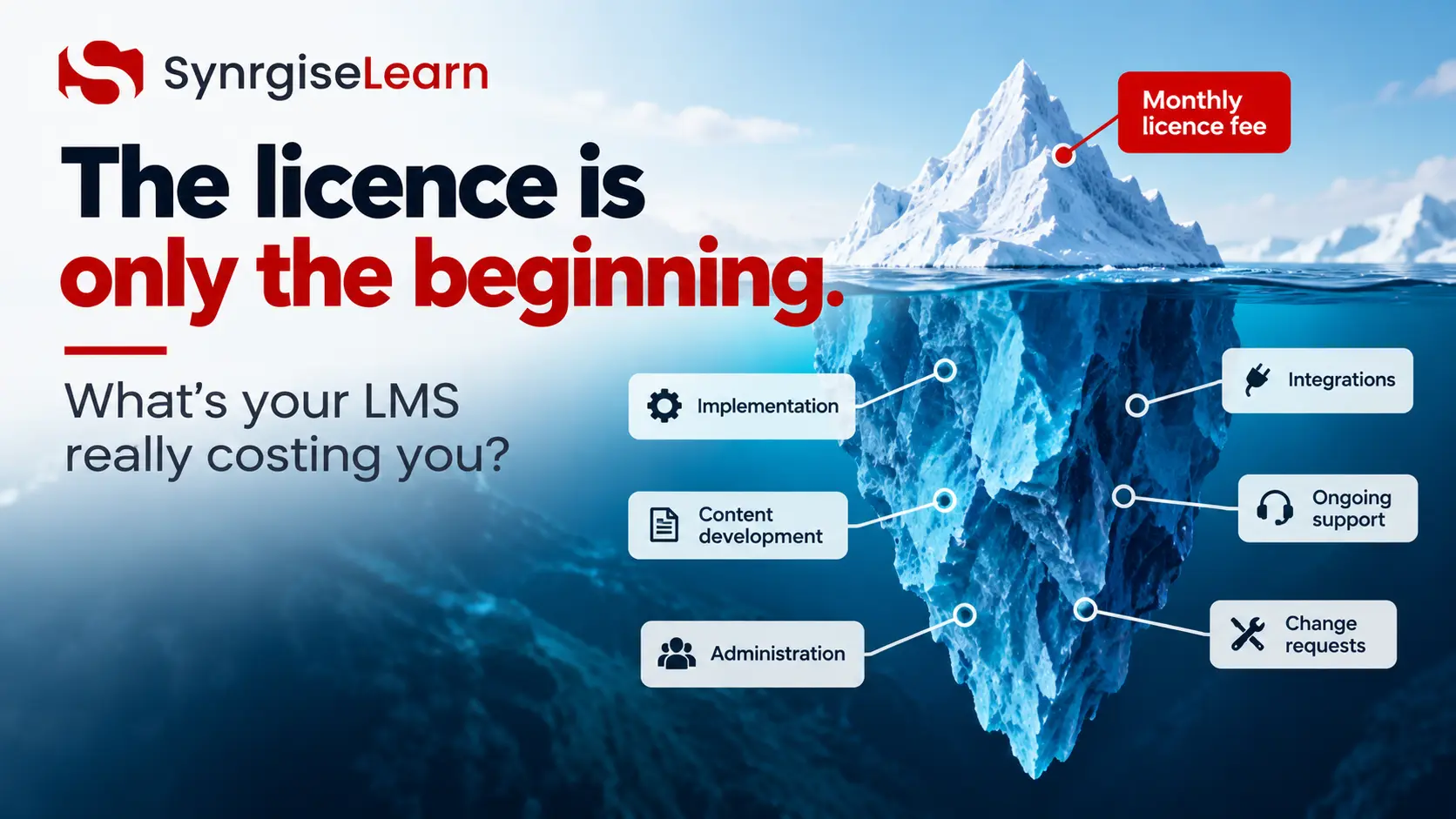
How Much Does an LMS Really Cost? A Practical Guide
An LMS advertised at R5,000 per month sounds considerably more attractive than one costing R10,000.
On paper, the decision seems straightforward. Over three years, one costs R180,000 in licence fees and the other R360,000.
But what happens when the cheaper option requires additional implementation work, paid integrations, separate support arrangements and ongoing administration?
Suddenly, the comparison becomes considerably less straightforward.
The monthly licence is only one part of the total cost of owning and operating a Learning Management System (LMS).
For organisations investing in learning technology, understanding the full financial commitment is just as important as understanding what the platform can do.
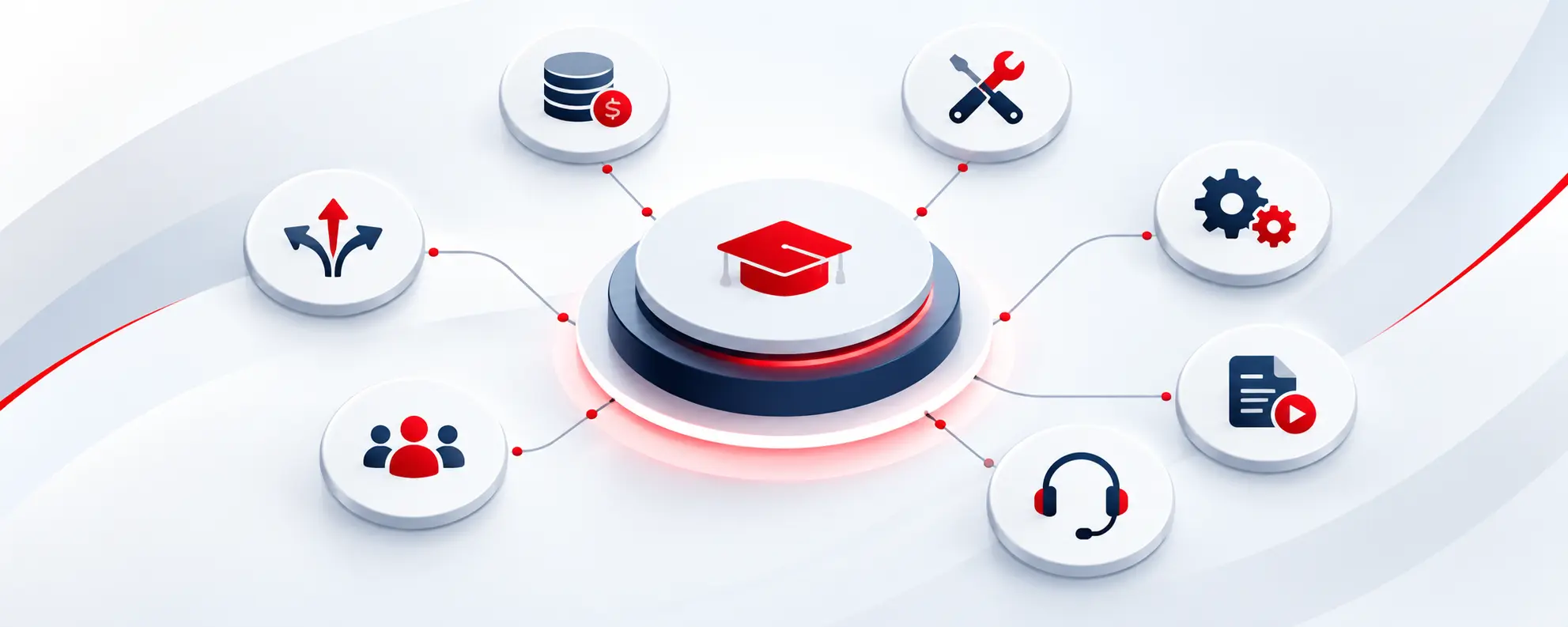
What makes up the total cost of an LMS?
Some costs are clearly stated in a quotation. Others depend on how the organisation intends to use the platform.
TCO includes the costs of purchasing, implementing, operating, maintaining and eventually expanding or replacing the system. Some costs are clearly stated in a quotation. Others depend on how the organisation intends to use the platform.

1. Licensing and subscription fees
Also consider whether the subscription includes all required functionality, whether usage limits apply and how annual increases are calculated.
2. Implementation and initial configuration
"What exactly will be ready and working when our implementation is considered complete?"
If the answer is unclear, the implementation budget probably needs more attention.


3. Content development and migration
Ask whether content migration, course conversion, assessment configuration and historical record imports are included.
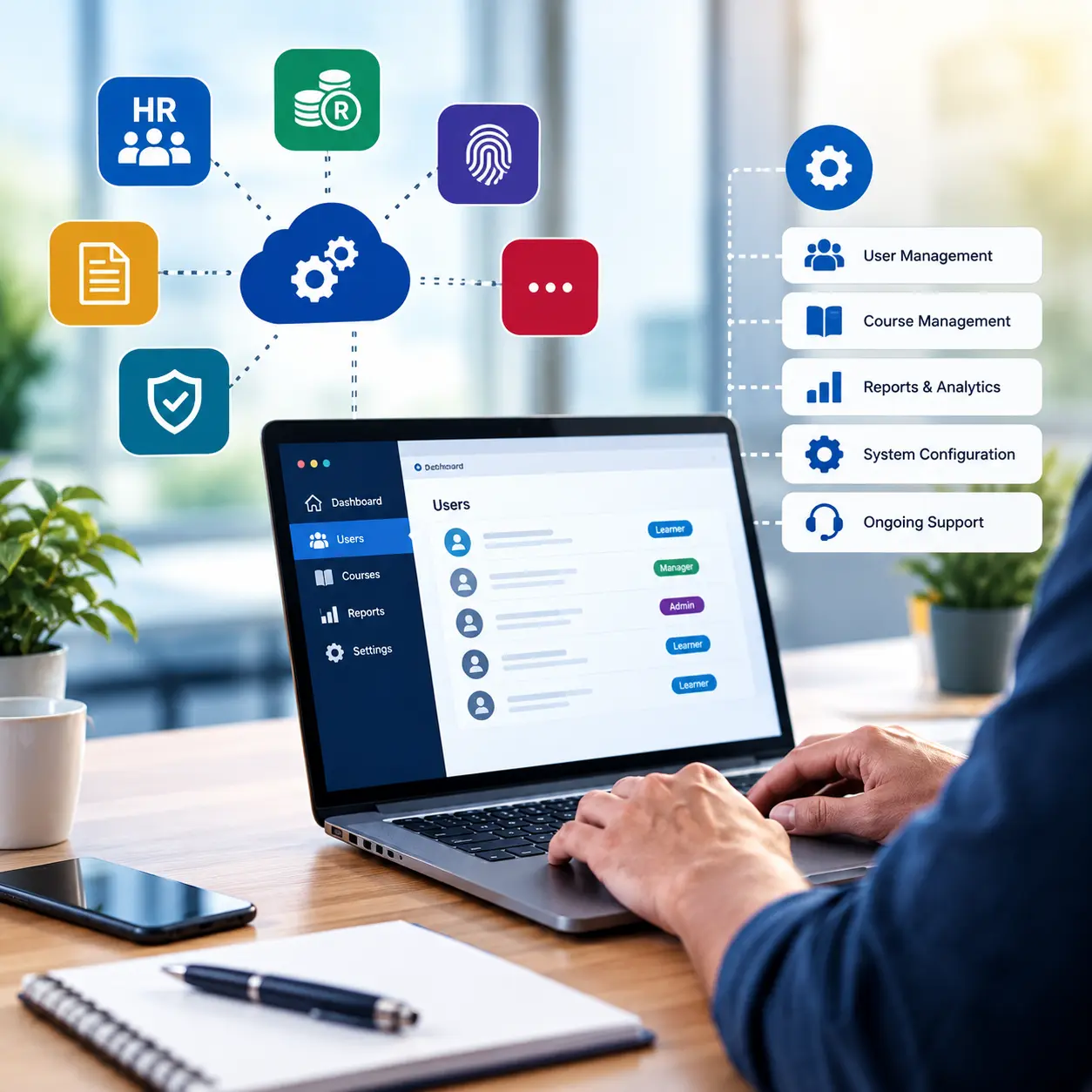
4. Integrations and ongoing administration
An inexpensive platform that requires substantial manual administration may cost the business more in staff time than a higher-priced system with appropriate automation.

5. Support, maintenance and change requests
These are not necessarily the same service.
Organisations should also understand how additional development, reporting requirements, configuration changes and new integrations will be handled.
A clear agreement protects both the customer and the provider from misunderstandings.
What does an LMS cost over three years?
Consider two hypothetical LMS proposals for the same organisation.
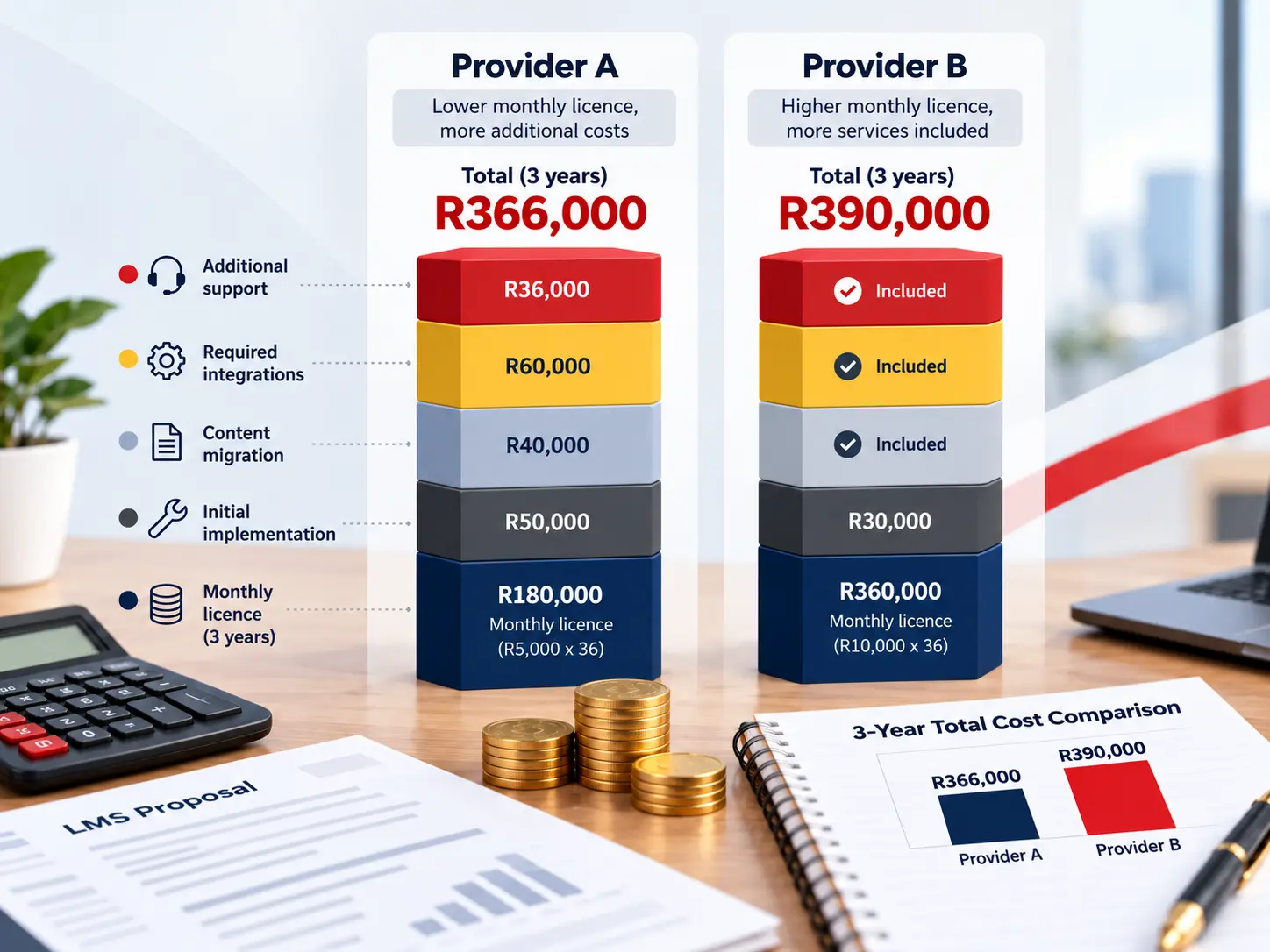
These figures are illustrative, not actual SynrgiseLearn pricing or market averages. They exclude VAT, annual increases, internal administration and future changes.
The point is not that more expensive software is automatically better. It certainly isn't.
The point is that you cannot make a meaningful price comparison until you are comparing the same scope of services.

Choosing the right LMS starts with a conversation. At SynrgiseLearn, we take the time to understand your organisation's needs before recommending a solution.
What should you ask an LMS provider before signing?
- What is included in the monthly subscription? Confirm user limits, functionality, hosting, maintenance and standard support.
- What does the implementation fee cover? Establish deliverables, responsibilities, acceptance criteria and potential additional costs.
- What will require additional payment? Ask specifically about content migration, integrations, custom reporting, development and support outside the agreed scope.
- What happens when our requirements change? Understand how additional work is estimated, approved and billed.
- What happens if we eventually leave? Confirm data ownership, export capabilities, notice periods and any applicable transition costs.
Don't pay for complexity you don't need
An organisation might request numerous integrations, advanced workflows and custom dashboards because they sound useful during a demonstration.
Six months later, half the functionality may be sitting unused. Every additional requirement can introduce configuration, testing, training and maintenance considerations.
That doesn't mean businesses should avoid sophisticated functionality. It means the investment should be justified by a genuine operational need.
Start with the processes that are currently creating the most difficulty.
Perhaps training administrators are spending hours manually allocating courses. Perhaps managers have no reliable visibility of compliance. Perhaps reporting across multiple branches is painfully slow. Solve those problems first. A phased implementation can help an organisation spread costs, reduce unnecessary complexity and expand the platform as its needs become clearer.
The cheapest LMS is not always the least expensive
The best commercial decision sits somewhere between those extremes. It balances functionality, operational efficiency, implementation costs, ongoing support and the organisation's ability to manage the system over time. And there is one final consideration that is difficult to capture in a spreadsheet: the working relationship.
Choose an LMS provider who is prepared to understand your business, explain the costs clearly and help you make sensible decisions, even when that means recommending less functionality rather than more.